


기획 전시
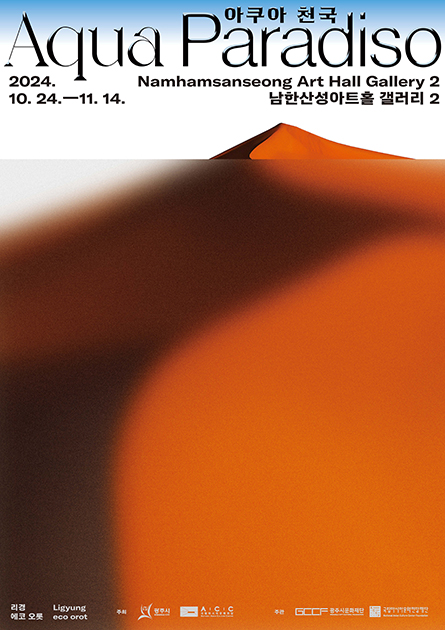
아쿠아 천국 (Aqua Paradiso)
<아쿠아 천국>은 수생태계와 인간의 대안적인 관계를 모색하는 융복합 전시다. 광주시문화재단 초청으로 남한산성아트홀에서 새롭게 선보인다.
-
ㆍ기간
2024.10.24(목)~11.14(목) (매주 월요일 휴관) -
ㆍ시간
10:00-18:00 -
ㆍ장소
남한산성아트홀 갤러리2 -
ㆍ대상
모든연령 -
ㆍ가격
무료 (자유관람) -
ㆍ문의
062-601-4663 -
ㆍ주최
광주시, 국립아시아문화전당 -
ㆍ주관
광주시문화재단, 국립아시아문화전당재단
예매 날짜/시간/금액을 선택하세요

-
소개
《아쿠아 천국》은 ‘물’에 관한 이야기이다. 오래전 인간이 자연을 신의 섭리로 이해하던 때, 물은 인류에게 경외와 감사의 대상이었다. 홍수, 폭우, 태풍, 지진해일 등을 인격화된 신의 감정적 산물이라 여겼으며, 단비와 샘물은 신이 주신 생명수로 받아들였다. 자연 앞에서 인간은 왜소하고 나약한 존재였고 자연의 거대함은 ‘숭고함(Sublime, 서브라임)’으로 상징되었다.
그런데 자연이 가졌던 ‘숭고함’은 인류세가 도래하며 사라져버렸다. 산업혁명 이후 탄소 배출량이 폭증하고, 생태계가 교란되고, 야생의 경계가 무너지며 각종 전염병이 주기적으로 창궐하고, 농지와 산림의 사막화가 가속되면서 자연은 더 이상 신비로운 경외의 대상이 아닌 보호해야 할 대상, 나약한 거대 타자, 통제되지 않는 위기가 되어 버렸다.
선사시대 노아의 방주 홍수와 2019년 베니스를 휩쓸었던 대홍수(Acqua Alta)는 서로 매우 다른 의미가 있다. 노아의 방주 홍수는 신의 노여움과 심판, 참회와 용서라는 의미를 내포하며 ‘숭고함’을 극대화 하는 반면, 베니스 홍수는 인간이 뻔히 알고 저지르고 있는 이기적인 행위의 결과가 인간에게 부메랑으로 되돌아온 대참사이다. 이 모든 비극의 원인 제공자는 결국 인간이다. 인간 욕망을 충족하기 위하여 자연을 수탈의 대상으로 삼았기 때문에 나타난 현상이다.
《아쿠아 천국》 전시는 물과 인간이 자연의 일부라는 자명한 명제에서 출발한다. 매체로 표현되는 작품은 물(자연), 근원, 본질을 다루고 있지만 대상으로 자리매김 하지 않고 포함된 일부로 관계와 경험을 드러낸다.
광주는 수도권의 도시들과는 다른 방향에서 미래를 그려가는 도시다. 자연환경 보호를 위한 각종 규제로 개발이 제한되어 신도시개발과 산업단지 유치로 100만 인구를 넘나드는 주변 도시들과 달리 한강 수변환경을 보존하기 위해 자연과 어우러지는 도시발전 계획을 고민하고 있다. 《아쿠아 천국》 전시는 광주시의 미래와 같은 방향을 바라보고 있다.
전 지구적 문제로 등장한 자연환경의 파괴와 이로 인한 기후위기가 미래가 아닌 현재가 되어버린 지금 예술은 각성을 촉구한다. 대상으로의 물(자연)이 아니라 생명의 근원이자 일체임을 자각시키고 스스로의 희생제의를 제안하는 이번 전시는 광주시에서의 관람객들에게 더욱 뚜렷하고 특별한 메시지로 전달될 것이다.
그런데 자연이 가졌던 ‘숭고함’은 인류세가 도래하며 사라져버렸다. 산업혁명 이후 탄소 배출량이 폭증하고, 생태계가 교란되고, 야생의 경계가 무너지며 각종 전염병이 주기적으로 창궐하고, 농지와 산림의 사막화가 가속되면서 자연은 더 이상 신비로운 경외의 대상이 아닌 보호해야 할 대상, 나약한 거대 타자, 통제되지 않는 위기가 되어 버렸다.
선사시대 노아의 방주 홍수와 2019년 베니스를 휩쓸었던 대홍수(Acqua Alta)는 서로 매우 다른 의미가 있다. 노아의 방주 홍수는 신의 노여움과 심판, 참회와 용서라는 의미를 내포하며 ‘숭고함’을 극대화 하는 반면, 베니스 홍수는 인간이 뻔히 알고 저지르고 있는 이기적인 행위의 결과가 인간에게 부메랑으로 되돌아온 대참사이다. 이 모든 비극의 원인 제공자는 결국 인간이다. 인간 욕망을 충족하기 위하여 자연을 수탈의 대상으로 삼았기 때문에 나타난 현상이다.
《아쿠아 천국》 전시는 물과 인간이 자연의 일부라는 자명한 명제에서 출발한다. 매체로 표현되는 작품은 물(자연), 근원, 본질을 다루고 있지만 대상으로 자리매김 하지 않고 포함된 일부로 관계와 경험을 드러낸다.
광주는 수도권의 도시들과는 다른 방향에서 미래를 그려가는 도시다. 자연환경 보호를 위한 각종 규제로 개발이 제한되어 신도시개발과 산업단지 유치로 100만 인구를 넘나드는 주변 도시들과 달리 한강 수변환경을 보존하기 위해 자연과 어우러지는 도시발전 계획을 고민하고 있다. 《아쿠아 천국》 전시는 광주시의 미래와 같은 방향을 바라보고 있다.
전 지구적 문제로 등장한 자연환경의 파괴와 이로 인한 기후위기가 미래가 아닌 현재가 되어버린 지금 예술은 각성을 촉구한다. 대상으로의 물(자연)이 아니라 생명의 근원이자 일체임을 자각시키고 스스로의 희생제의를 제안하는 이번 전시는 광주시에서의 관람객들에게 더욱 뚜렷하고 특별한 메시지로 전달될 것이다.
- 리경
- Ligyung
- 나의 환희는 거칠 것이 없어라
2018, 4K 단채널 비디오, 멀티채널
사운드, 거울, 5분 56초 - My Jubilee ist Unverhemmet
2018, 4K single channel video, multichannel
sound, mirror, 5min. 56sec.
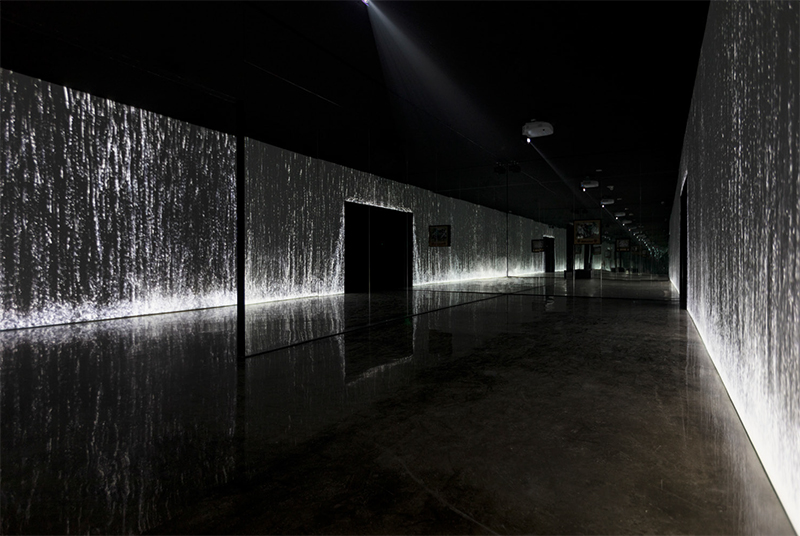
- 리경은 빛이라는 비물질적 매체를 활용하여 공감각적 경험을 선사하는 설치작품을 선보여 왔다. 빛에 대한 작가의 관심은 피상적인 물질세계를 넘어 존재에 대한 근원적인 인식에 맞닿고자 하는 시도에서 비롯된다. 〈나의 환희는 거칠 것이 없어라〉는 ‘하늘과 땅이 만나는 연못’이라는 뜻을 가진 제주의 천지연폭포를 빛과 사운드라는 매체로 재해석한 작품이다. 하늘에서 내린 비와 땅에서 솟아오른 물이 만나고, 하늘에서 떨어지는 듯한 물줄기 아래 끝없이 깊게 펼쳐지는 연못이 자리한 천지연폭포의 순환적이고 반복적인 구조는 작가가 작품화를 결정한 계기로 작동했다. 선명하게 빛나면서 하강하는 물방울 이미지와 극대화된 사운드로 전시공간에 구현된 폭포의 비경은 벽면과 바닥을 통해 반사되면서 공간 전체로 확장된다. 이렇듯 무한히 전개되는 폭포의 이미지에서는 모든 것이 흐른다는 ‘만물유전’ (萬物流轉, Panta Rhei)의 법칙이 드러난다. 한편 본 작품의 제목은 백남준이 1977년 발표한 LP인 「My Jubilee ist Unverhemmet」의 제목에서 비롯된바, 유연하고 강인하게 흘러내리는 폭포의 이미지는 그 자체로 백남준이 강조하던 삶과 환희를 지시하기도 한다.
- Ligyung has presented installations that suggest synesthetic experiences by using light, an immaterial medium. The artist’s attention to light originates from the attempt to reach the original cognition for existences going beyond the superficial material world. My Jubilee ist Unverhemmet is a re-interpretation of Cheonjiyeon Waterfall, meaning a pond where the sky meets the land, in Jeju Island with the mediums of light and sound. The cyclical and repetitive structure of the waterfall, in which rain from the sky and water soaring upwards from the land meet and a pond that endlessly spreads out under the cascade that looks as if from the sky is located, inspired the artist to select it as the subject matter for her work. The mysterious scene of the waterfall, which is embodied with the sparkling falling water drop image and maximized sound in the exhibition space, is expanded to the entire space by being reflected on the wall and floor. Thus, the infinitely unfolding image of the waterfall displays the concept of “Panta Rhei,” meaning that everything flows. Meanwhile, the title of this work derives from the title of the LP record, My Jubilee ist Unverhemmet, released by Nam June Paik in 1977. The image of the waterfall falling smoothly and tenaciously itself refers to the life and jubilee emphasized by Nam June Paik.
- 에코 오롯
- eco orot
- 제주산호뜨개
2018~2022, 털실, 솜, 가변설치 플라스틱 만다라
2019~2022, 해양 플라스틱, 모래, 가변설치 - Jeju Coral Crochet
2018~2022, yarn, polyester fill, paper,
dimension variable Plastic Mandala
2019~2022, ocean plastic waste, sand,
dimension variable
- 에코 오롯은 사람과 자연이 함께 살아가는 오롯한 세상을 위해 창조하고 행동하는 생태예술활동을 지속해왔다. 이러한 활동은 기후위기시대에 예술이 어떠한 역할을 할 수 있을지 질문하고 자연의 고통에 공감할 수 있는 감수성을 제고하는 한편 지구를 파괴하는 우리 자신의 모습을 변화시키려는 목적에서 만들어진다.
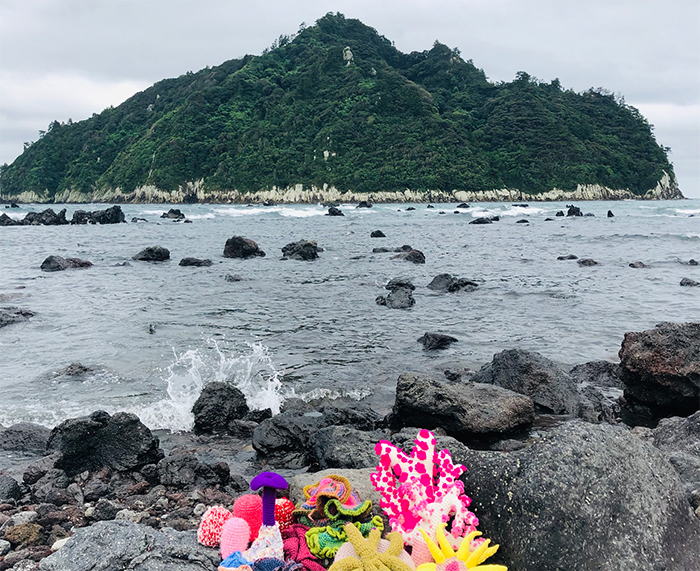
본 전시에서는 에코 오롯의 활동 두 가지를 소개한다. 〈제주산호뜨개〉는 함께 모여 산호를 뜨는 작업을 통해 산호의 아름다움을 전하고 해양생태계에 대한 관심을 촉구하는 환경운동이자 커뮤니티 아트다. 수온상승으로 인한 산호백화현상, 산호의 죽음은 기후위기로 인해 해양생태계 전체에 닥친 위험의 지표가 된다. 산호뜨개는 해양생태계가 맞닥뜨린 위기를 알리기 위해 세계 여러 곳에서 진행되어 온 운동으로 그중 에코 오롯의 〈제주산호뜨개〉는 특별히 제주도의 연산호에 초점을 맞춘다. 정해진 규범이 없고 끝도 시작도 존재하지 않으며, 부분과 전체가 이어져 있는 산호뜨개는 자유로운 방식과 유기적인 형태에서 자연과 산호를 닮았다.
〈플라스틱 만다라〉는 바다에 대한 애도와 축복의 마음을 담고 있다. 작가는 고행하듯 바다 앞에 엎드려 모래사장을 기어 다니며 플라스틱 조각을 줍는다. 그렇게 얻은 플라스틱으로 티베트의 승려들처럼 모든 생명을 위한 축복의 기도를 담아 만다라를 만들고 해체한다. 거대한 바다에서 플라스틱 조각을 한 알 한 알 줍는 과정은 고된 노동으로도 차마 다 헤아릴 수 없는 바다의 고통을 전한다. 끝내 해체되어 사라지는 만다라는 지난하고 허무한 것일지도 모른다. 그럼에도 이 모든 과정을 무릅쓰고 감내하는 이의 간절함 덕분에 작품의 메시지는 당장의 변화를 촉구하는 시급하고 간곡한 탄원으로 다가온다. - The eco art collective, eco orot, has been creating and practicing for a world where our relationship with nature is orot (meaning enough). Such activities raise the question of the role of art in the era of climate crisis, and are motivated to create empathy with the suffering of nature. By doing so, the collective aims to change the human actions that destroy Earth.
This exhibition introduces the two activities of eco orot. Jeju Coral Crochet is an environmental campaign and community art that delivers the beauty of coral and demands attention to suffering of the marine ecosystem. The phenomenon of coral bleaching and death due to an increase of ocean temperature serves as an indicator to the crisis to the entire marine ecosystem. Coral Crochet is an international grass-root project done by many communities around the world to raise awareness of this crisis, and Jeju Coral Crochet by eco orot especially focuses on soft corals of Jeju. Coral Crochet, in which no fixed patterns or predetermined ways of crochet exist, resembles the organic forms of corals and nature, where the parts and the whole are interconnected.
Plastic Mandala expresses grief towards the suffering of the ocean and the wish to bless the ocean at the same time. The artist and participants pick up plastic pieces by kneeling down and crawling on the sand beach as if engaged in a form of prayer. And they create and disassemble mandala like Tibetan Buddhist monks who make and destroy sand mandala while reciting blessing to all sentient beings. The process of picking tiny plastic pieces one by one is a painstakingly long one, but it is not comparable to the unfathomable amount of suffering that humans caused to the ocean. Mandala, which is finally disassembled and disappears, may seem futile. Owing to the desperateness of the artist who painstakingly repeats and endures this entire process over and over, the message from the work conveys an urgent and earnest entreaty to demand immediate changes in our actions. eco orot